Quick answer
Enterprise staff augmentation is a model where a large organization adds vetted external engineers directly into its own teams, under its own management, to fill a capacity or skills gap without permanent headcount. At enterprise scale the engineering rate is the easy part. What decides the engagement is everything around it: data security, present-tense IP assignment, NDAs, the right compliance posture for your industry, a watertight MSA and SLA, vendor vetting, and the ability to scale from one role to a full team. An embedded, white-label model like Ad Snipper’s runs roughly $15 to $35 per hour, keeps all IP with you, and lets you start in days instead of the 90-plus days a senior hire now takes.
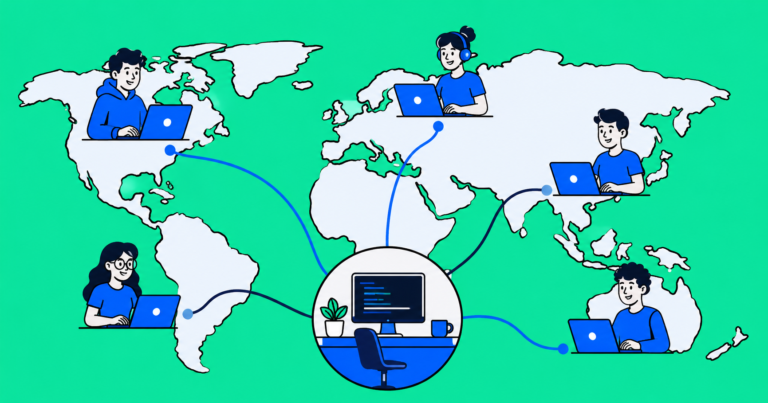
For a large organization, the talent problem is rarely a single open role. It is a roadmap that needs forty engineers by the next quarter, a niche skill your recruiters cannot find, and a procurement process that takes longer than the project window. Enterprise staff augmentation exists to close that gap: you bring in vetted external engineers who work inside your teams, under your direction, while a provider carries the vetting, payroll, and employment overhead. The model is well proven. The market for IT staff augmentation and managed services was valued at USD 291.71 billion in 2025 and is projected to reach USD 317.96 billion in 2026, and roughly 78 percent of businesses plan to expand their use of it in 2026.
This guide is written for the people who actually approve these engagements: engineering directors, VPs, and procurement and security teams. It covers why enterprises use the model, the things that matter once you operate at scale, how to evaluate a provider, and the risks to manage. We run an embedded augmentation model at Ad Snipper, so we will be direct about what to demand from any vendor, including us.
Why enterprises use staff augmentation
The drivers are not mysterious, and they are not only about cost. At enterprise scale, four pressures push toward augmentation.
- Speed. Traditional hiring cannot keep up. The average time to hire a senior developer in 2026 has stretched to 90 or more days, up from 52 in 2024, and offer acceptance rates have fallen sharply as competition intensifies. A pre-vetted bench gets a qualified engineer contributing in days.
- Niche skills. By 2026, 90 percent of organizations are expected to feel the pinch of IT skill shortages, with the sharpest scarcity in senior engineers who can run AI in production and own complex systems. Augmentation lets you rent that exact specialization for as long as you need it.
- Flexible capacity. You can scale a team up for a launch or a migration and scale it back down afterward, without the cost and reputational drag of layoffs. This is the structural advantage over permanent headcount.
- Cost. An offshore embedded model can reduce total labor cost by 50 to 70 percent versus equivalent domestic roles once you account for benefits, infrastructure, and administrative overhead. At enterprise volume, that compounds quickly.
The honest version is that around 74 percent of enterprises now use staff augmentation to overcome talent shortages. The model has moved from a stopgap to a standing part of how large engineering organizations staff their roadmaps.
What changes at enterprise scale
A startup can hire an augmented engineer on a handshake and a marketplace contract. An enterprise cannot. The moment you grant external personnel access to production systems, customer data, and source code, a set of concerns moves from optional to mandatory. These are the things that actually decide whether an engagement is approved.
Security and data protection
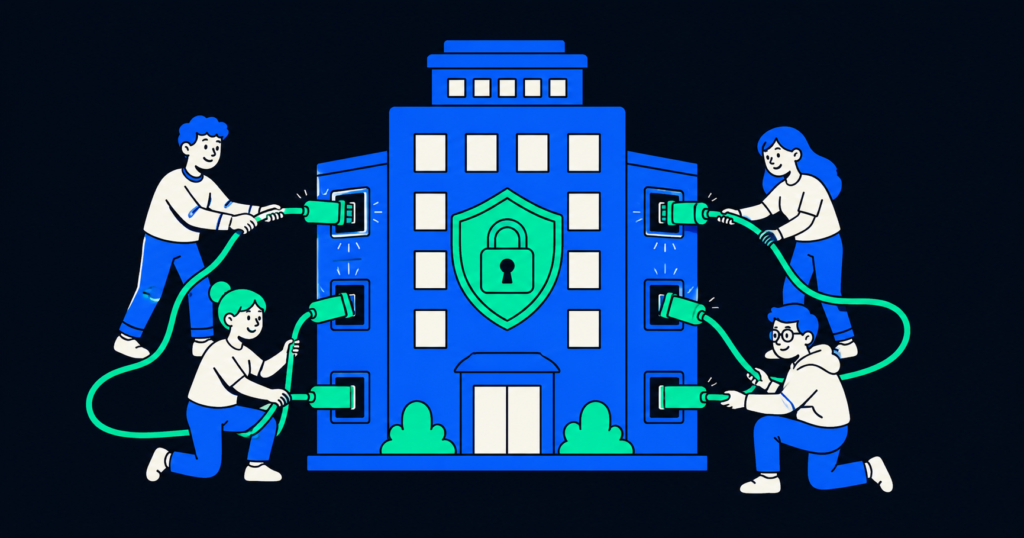
Augmenting staff means giving outside people access to sensitive systems. The non-negotiable safeguards include NDAs signed before any code access, least-privilege access controls, monitored development environments, and background verification appropriate to your industry. At enterprise scale you should expect a provider to support SSO, device policies, and access that you can revoke instantly. Security is a prerequisite, not a feature you negotiate later.
IP assignment and ownership
This is where engagements quietly go wrong. A vague or missing IP clause leaves ownership of the code your team paid for legally uncertain. The fix is specific: the contract must assign all work product to your organization in clear, present-tense language, defined from the outset of the engagement. Do not accept “will assign” or silence. You want the IP to vest in you as it is created, with no ambiguity about derivative work, pre-existing tooling, or what happens when the engineer rotates off.
Compliance for your industry
Generic staffing agreements do not address the access considerations that regulated work demands. For healthcare under HIPAA, financial services under SOC 2, and defense contractors under CMMC, staff augmentation introduces data and personnel requirements that eliminate many providers outright. One point matters before you go further: CMMC Level 2 and Level 3 environments require U.S. persons with appropriate clearances, so offshore augmentation is simply not viable for that classified work, regardless of contract language. For the large majority of commercial engineering, an offshore embedded team is appropriate, provided the SOC 2 and data-handling posture is documented and verifiable.
Contracts, MSA, and SLAs
At enterprise scale the engagement lives or dies on the paper. You want a Master Services Agreement that fixes the IP terms, confidentiality, liability, and breach notification once, so individual placements run against settled terms. Where you need delivery guarantees, an SLA should define availability, response times, and reporting. Watch for two failure modes: pricing opacity, which is a red flag in any serious vendor, and missing operational-continuity provisions. When an engagement ends, compliance-critical knowledge needs to survive through documented source-code handover, architectural decision records, and access continuity.
Scalability, time zones, and reporting
An enterprise rarely wants one engineer. It wants the ability to go from one role to a full pod and back, on the same terms, with the same vetting bar. It also wants enough time-zone overlap for real collaboration. Offshore models with large time gaps can add coordination cost, while overlapping hours keep that overhead low, so confirm guaranteed overlap with your core working day. Finally, demand reporting: visibility into hours, output, and progress is what keeps an augmented team accountable to your own engineering leadership.
Enterprise concerns and how to address them
Here is the same checklist as a reference table. Use it to pressure-test any provider, including the section that follows on Ad Snipper.
| Concern | What to require | Red flag |
|---|---|---|
| Data security | NDAs before access, least-privilege controls, instant revocation, background checks | Shared logins, no access audit, no offboarding process |
| IP ownership | Present-tense assignment of all work product to you, defined upfront | “Will assign” language, silence on derivative work |
| Compliance | Documented SOC 2 and data-handling posture for your industry | Generic agreement, no industry-specific provisions |
| Contracts | MSA fixing IP, liability, and breach terms; SLA where delivery is guaranteed | Opaque pricing, no continuity or handover clause |
| Vetting | Documented, repeatable screening with a transparent pass rate | Resume forwarding, no skills testing |
| Scalability | One role to a full team on the same terms, with time-zone overlap and reporting | No bench, no overlap guarantee, no visibility into output |
How to evaluate a provider
Once the must-haves above are met, the differences between vendors come down to model and discipline. Three questions separate a serious enterprise partner from a body shop.
Who directs the work, and who owns the outcome? This is the line that defines the model. With staff augmentation, your team manages the external engineer directly and you own the result. With outsourcing or managed services, the provider runs their own team against an SLA and hands you a deliverable. Both are valid, but they solve different problems, and conflating them is how budgets get burned. If you want hands inside your own process rather than a black box, you want augmentation. Our deeper breakdown of that distinction lives in staff augmentation vs outsourcing.
How rigorous is the vetting? At enterprise scale a single bad placement is expensive and slow to unwind. Ask for the actual screening process, the pass rate, and what skills testing looks like before a candidate ever reaches you. A provider that forwards resumes is not vetting; a provider that runs structured technical and communication gates is. You can see the gates we run on our how we vet page.
Can the model flex without renegotiation? The point of augmentation is elasticity. A strong partner lets you add a specialist, stand up a pod, or scale back after a launch on the same contract and the same terms, with a free replacement when a fit is wrong. If every change means a new negotiation, the flexibility you bought is not real.
Where Ad Snipper fits
Ad Snipper runs an embedded, white-label staff augmentation model built for exactly these requirements. Engineers work inside your teams, take direction from your leads, and present as your staff. You keep all IP, assigned to you from the start. Vetting, onboarding, and free replacement are included, and the model scales from a single role to a full embedded team without changing the commercial terms.
Pricing is fixed and transparent across three engineering tiers:
- $15/hr ($2,400/month full-time) for automation specialists who build workflows, agents, and low-code pipelines.
- $25/hr ($4,000/month full-time) for an AI and software developer shipping application features, integrations, and RAG systems.
- $35/hr ($5,600/month full-time) for a machine learning engineer handling model training, fine-tuning, and MLOps.
Part-time runs at half. That places a senior, dedicated engineer at roughly 50 to 60 percent below US in-house cost, with the vetting, IP, and replacement terms enterprise buyers actually need documented rather than assumed. For the engineering-specific version of this model, see our guide to AI staff augmentation.
Risks to manage
No model is free of risk. The ones worth planning for are well understood.
- Knowledge loss. Context can walk out the door when a contractor rotates off. The mitigation is proactive: documented handover, decision records, and overlap before any departure. Make it a contract term, not a hope.
- Security exposure. External access is the inherent risk. Manage it with least-privilege controls, monitored environments, and instant revocation rather than trust.
- Misaligned model. Choosing augmentation when you actually wanted a managed outcome, or the reverse, leads to friction. Decide who owns the outcome before you sign.
- Coordination overhead. Large time-zone gaps add cost. Insist on guaranteed overlap with your core hours.
Handled deliberately, none of these is a reason to avoid the model. They are reasons to choose a provider whose contract, vetting, and operating discipline address them upfront. When you are ready to scope a role or a team, you can hire engineers into an embedded arrangement that flexes as your roadmap does.
Ready to build your team? Use the dedicated team builder to price a custom pod across any roles you need and see your savings versus hiring in-house, then book a call to get them embedded in days.
Further reading: How to build an offshore development team.
Frequently asked questions
Is enterprise staff augmentation the same as outsourcing?
No. With outsourcing or managed services, the provider runs their own team against a service-level agreement and delivers a result. With staff augmentation, the external engineers work inside your teams, under your direction, and you own the outcome. The provider handles vetting, payroll, and replacement, not the work itself. Picking the wrong one of these is a common and expensive mistake.
Who owns the IP and code an augmented engineer produces?
You should, and the contract must say so in present-tense, assign-on-creation language defined from the start. With Ad Snipper, all IP and work product belong to the client. Avoid any agreement that uses vague “will assign” wording or stays silent on derivative work, because that leaves your ownership legally uncertain.
Can offshore augmentation meet enterprise compliance requirements?
For most commercial engineering, yes, provided the provider documents its SOC 2 and data-handling posture and supports least-privilege access, NDAs, and instant revocation. The exception is classified work under frameworks like CMMC Level 2 and 3, which require U.S. persons with clearances and rules out offshore staffing regardless of contract terms.
How quickly can an enterprise scale a team up or down?
Because talent is pre-vetted, you can add a specialist or stand up a pod in days rather than the 90-plus days traditional hiring now takes, and scale back down after a launch without layoffs. With Ad Snipper this happens on the same commercial terms, with free replacement if a fit is wrong, so flexibility does not mean renegotiation.
Related reading: What is staff augmentation? · What is an offshore development center?.